Last updated November 23, 2026
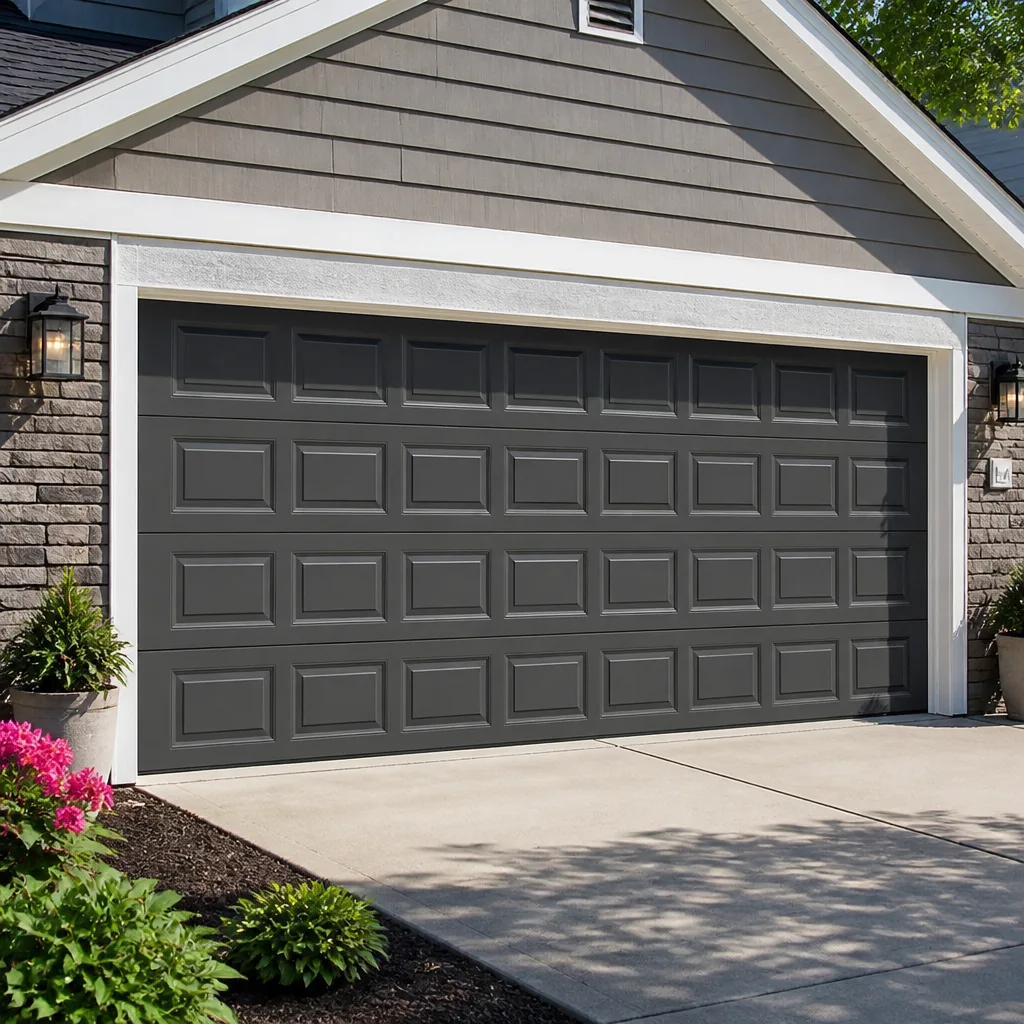 Raised-panel steel
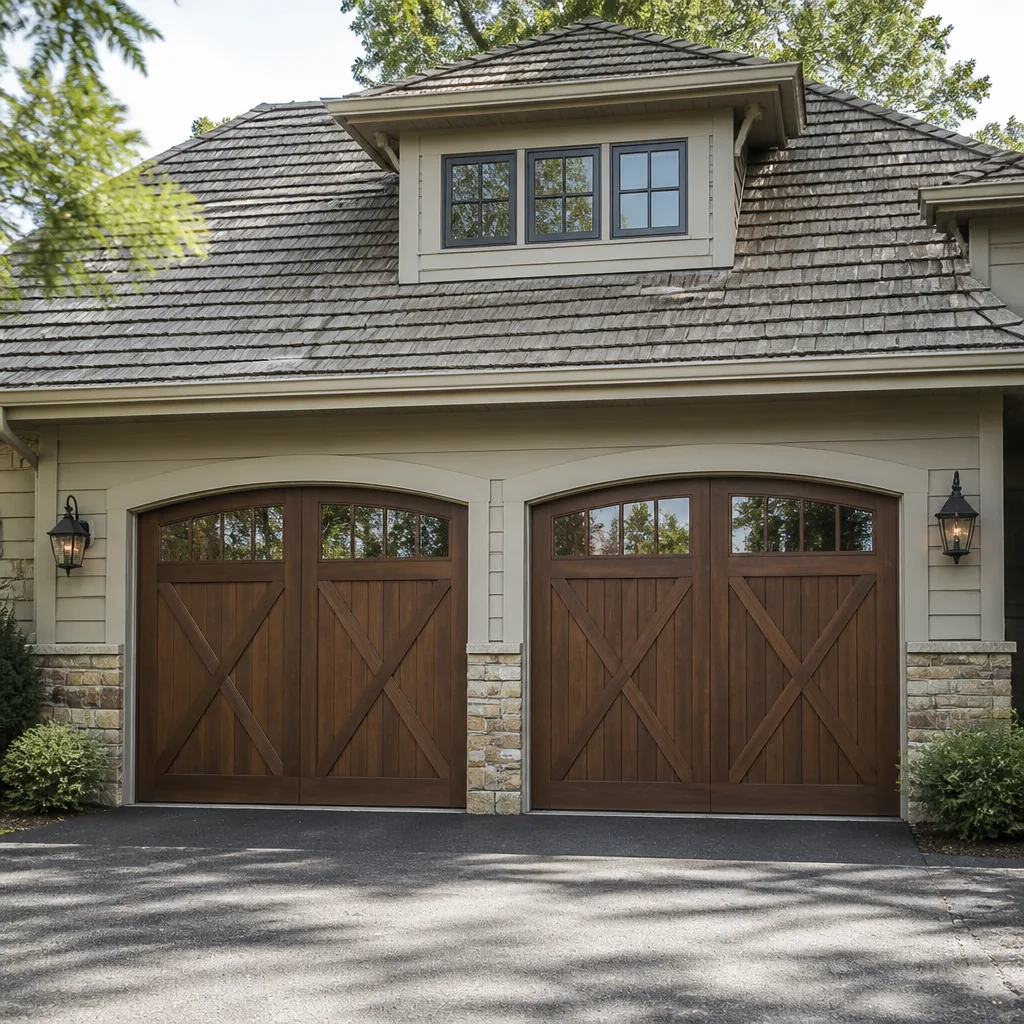 Carriage house
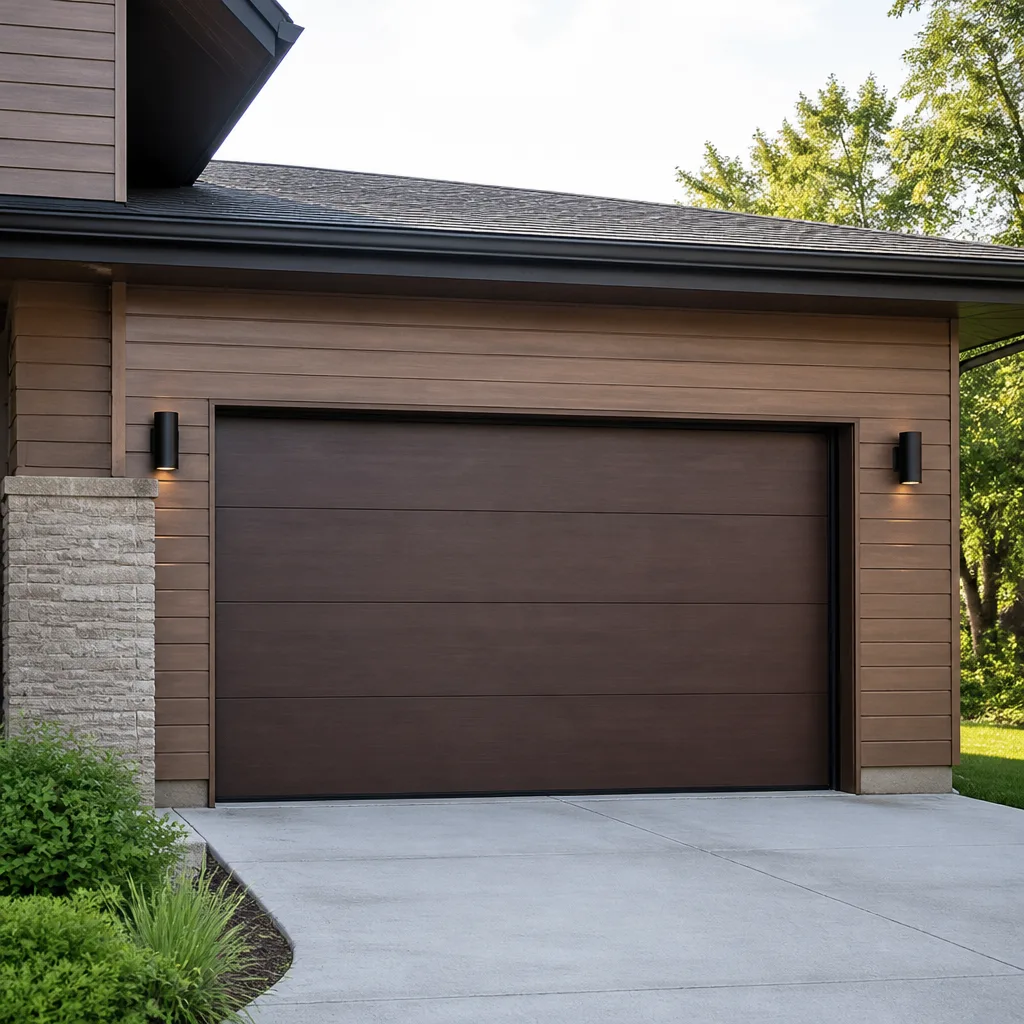 Modern flush
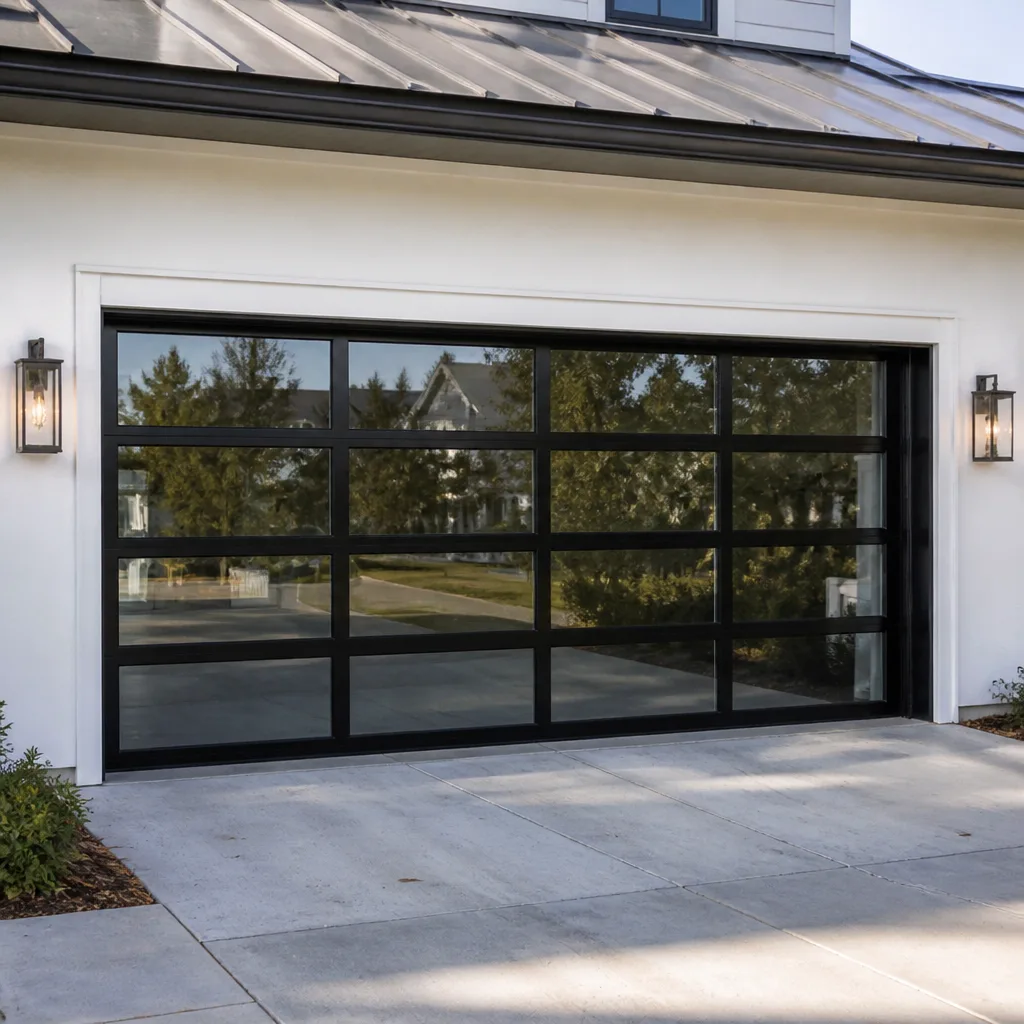 Full-view glass
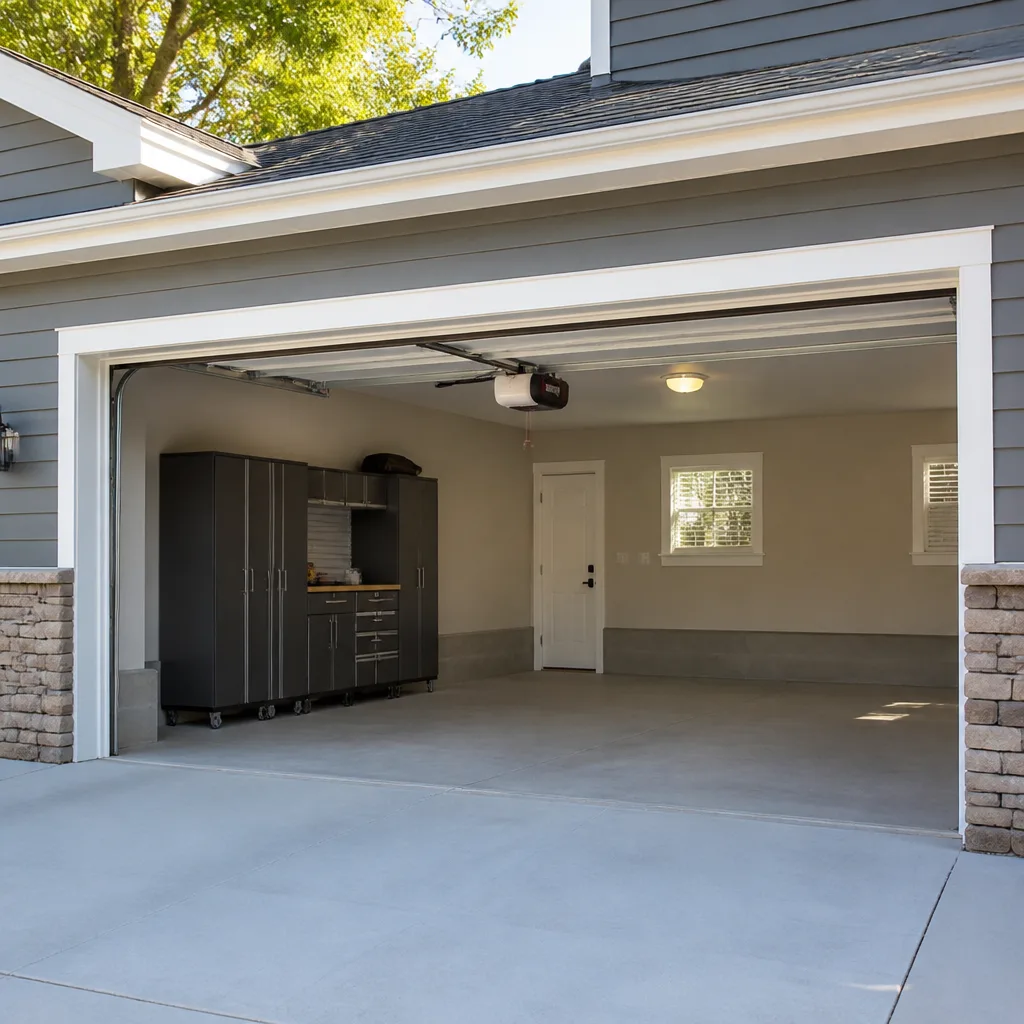 LiftMaster openers
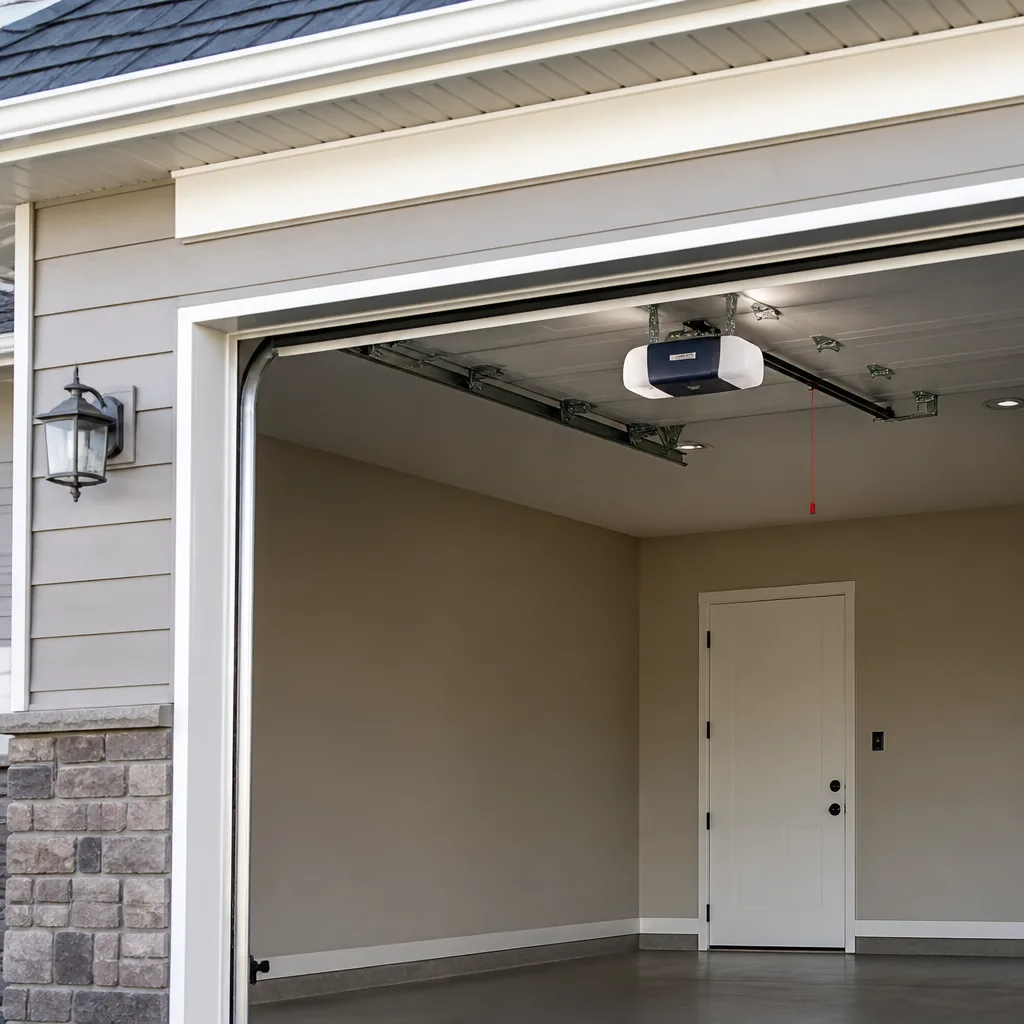 Chamberlain openers
Full 25-point door and opener safety check with every visit - springs, cables, rollers, tracks, and your LiftMaster or Chamberlain opener included
You get a price before we start. It does not change when the pro arrives.
Get your free estimateThe Complete Guide to Garage Doors in College Park
Most “complete guides” to garage doors are written for a suburban tract house in Phoenix with a wide two-car bay and eight feet of clean headroom. College Park homeowners live in a different world. Walk down a block near the University of Maryland and you’ll pass 1940s Cape Cods with tight single bays, postwar ranchers with detached garages at the end of a narrow driveway, and newer townhome infill wedged onto lots that leave almost no side clearance. Each one creates a different compatibility question, and generic advice misses nearly all of them. This guide maps door types, opener drives, and materials to the housing stock College Park actually has, so you can decide what’s worth repairing, what’s worth upgrading, and when a full replacement makes sense.
Quick Answer
Garage door work in College Park comes down to three decisions: matching a door and opener to your actual clearance and wiring, choosing materials that survive Mid-Atlantic humidity and heavy tree debris, and knowing when repair beats replacement. Older homes here often need low-headroom track or a jackshaft opener, detached garages need low-voltage control wiring treated as its own job, and a repair is usually the right call until a door’s structure is failing. We work on the brand you already have – Clopay, Amarr, Wayne Dalton, Genie, and others – so you don’t have to replace working hardware just to get it serviced.
Styles & brands we work with
- Raised-panel steel
- Carriage house
- Modern flush
- Full-view glass
- LiftMaster openers
- Chamberlain openers
Table of Contents
- How College Park’s Housing Stock Shapes Your Door
- Low Headroom and Side Room: What Your Garage Actually Has
- Detached Garages and Wiring: A Different Set of Rules
- Door Materials for College Park’s Humidity and Tree Canopy
- Choosing an Opener Drive Type for Your Layout
- Repair vs. Replace: The Cost-Per-Year Math
- Working With the Brands Already on Your House
- Common Mistakes to Avoid
How College Park’s Housing Stock Shapes Your Door
College Park is not a single housing market. It’s at least four, layered on top of each other by decade. A garage door guide that assumes one standard configuration will steer you wrong half the time.
Here’s how the main groups break down:
- 1940s to 1970s Cape Cods and bungalows near the older neighborhoods close to campus often have a single-car bay that was added or retrofitted, sometimes with a ceiling height that was never designed for a sectional door. Clearance is the first thing we check.
- Postwar ranchers in the neighborhoods around College Park typically have a wider but shallower bay. The depth matters because a sectional door needs horizontal track running back into the ceiling.
- Townhome infill built more recently tends to have attached garages with modern framing and standard headroom, but very tight side clearance and shared walls that make opener noise audible in the room above.
- Detached garages still common on the older blocks sit at the end of a driveway or in the backyard, often with their own electrical quirks.
The practical takeaway: before you shop for a door or an opener, you need to measure headroom, side room, and back room. Those three numbers, not the door’s color or style, determine what will physically fit.
- Headroom is the distance from the top of the door to the ceiling. Standard sectional doors need enough for the horizontal track and the opener rail.
- Side room is the space beside the door for the vertical track and, on torsion systems, the spring shaft.
- Back room is how far the track extends into the ceiling.
If any of those comes up short, you’re not stuck – you just need the right hardware. That’s where low-headroom track and jackshaft openers come in, which we cover next. When a door is genuinely worn out and the measurements don’t fit a standard replacement, our garage door repair team can tell you what will work before you buy anything.
Low Headroom and Side Room: What Your Garage Actually Has
Low headroom is the single most common surprise in older College Park garages. A door that fit fine when the house was built in 1950 may not have the ceiling clearance modern sectional hardware assumes, and a standard off-the-shelf door won’t fit without modification. The fix is not to force it – it’s to specify hardware built for that space.
Two solutions do most of the work:
- Low-headroom track. This is a track configuration that routes the horizontal section differently so a sectional door can operate under a lower ceiling. It’s a hardware choice, not a door choice, and it solves many single-car Cape Cod bays.
- Jackshaft openers. A jackshaft opener mounts on the side of the door at the torsion shaft instead of hanging from the ceiling. That means it needs no ceiling rail at all, which is exactly what a low-ceiling or side-clearance-limited bay calls for.
Side room is the other half of the equation. Vertical track, torsion springs, and the spring shaft all live beside the opening. A bay with a wall right up against one side may have almost no side room, which rules out some torsion setups unless the shaft is offset. We’ve seen plenty of College Park garages where the previous owner squeezed in hardware that “mostly” fit, and the door has been straining ever since.
Here’s the check to run before you buy anything:
- Measure floor to ceiling at the highest point and at the door opening – they’re not always the same.
- Measure from the door edge to the nearest wall on both sides.
- Note the door’s track back into the ceiling and whether anything (a beam, ductwork, a furnace flue) intrudes.
- Confirm the door’s current type: sectional or one-piece tilt-up. Older tilt-up doors have their own clearance rules entirely.
Get these numbers right and the door selection follows. Get them wrong and you’re returning a door. If you’re not sure how to read your clearance, the team that handles garage door opener repair in College Park can measure it on a visit and tell you exactly what your bay will accept.
Detached Garages and Wiring: A Different Set of Rules
Plenty of older College Park blocks still have detached garages, and they behave nothing like attached ones. An attached garage shares a wall and, often, a common electrical panel with the house. A detached garage is its own little building, and its opener wiring and control wiring have to be treated as such.
What that means in practice:
- Power may be a single circuit run on its own, and it may be shared with outdoor lighting or a shed. That affects what the opener can draw safely.
- Control wiring runs farther. The wall button, the safety sensors, and any keypad are a longer cable run than in an attached garage, and old cable in an unheated building degrades faster.
- Moisture and temperature swing harder. A detached garage with no conditioned space sees bigger swings than a garage sharing a wall with a heated house, and that’s relevant to both the door and the opener electronics.
- Safety sensors still must be aligned and wired. A detached garage is exactly where homeowners are tempted to skip the sensor wiring because “it’s just the garage.” Don’t.
Wiring is where we recommend a licensed professional rather than DIY. Running or modifying a circuit, especially in an unheated outbuilding, is work where shortcuts have real consequences, and most cities require an electrical permit for new circuits. Ask your city’s building department what applies to your address before anyone starts pulling cable. The garage door side – sensors, wall controls, opener programming – is separate work, and a technician who understands detached layouts can usually sort it without a second contractor.
The main point: if you have a detached garage, tell whoever quotes the job. It changes the estimate, and it should.
Door Materials for College Park’s Humidity and Tree Canopy
College Park is a Mid-Atlantic climate with real seasonal swings – muggy summers, freezing winters, and a lot of rain on either side. Add one of the heavier urban tree canopies in the region, and you get a garage door that has to handle both moisture and debris. Material choice matters here more than in a dry climate.
Here’s how the three main options hold up:
- Steel. The most common choice, and for good reason. Modern steel doors with a factory finish handle humidity swings well and resist dents reasonably. They’re lighter, so opener strain is lower. In College Park, steel’s weakness is that a scratch or a dent that breaks the finish invites rust, so it’s worth touching up nicks promptly.
- Wood composite. Composite doors give you the warm look of wood – a good match for a Cape Cod or a bungalow – without the constant refinishing a solid wood door demands in this humidity. Good composites from Clopay and Amarr hold up well, but they’re heavier, which affects opener sizing.
- Aluminum. Lightweight and rust-resistant, which sounds ideal for a humid climate. The catch is that aluminum dents more easily and, in a heavy wind or a tipped ladder incident, shows the damage. It’s a strong choice for a low-traffic bay but a weaker one for a busy single-car opening.
Tree canopy is the piece most guides skip. College Park’s mature trees drop leaves, twigs, and seed pods onto roofs and driveways all season, and a good deal of that ends up in door tracks and on top of the door. A textured or wood-look finish hides the scuffing that debris causes better than a glossy steel face. Whatever you choose, plan to clear the tracks and the top of the door each season – a blocked track is the most common avoidable door failure we see.
Choosing an Opener Drive Type for Your Layout
If you live within earshot of an attached living space – which describes most townhome and attached-ranch households in College Park – the opener drive type you choose affects daily life, not just function. All three common drives open a door. They sound very different doing it.
Here’s the honest comparison:
- Belt drive. The quietest choice because a reinforced belt replaces the metal chain. If your garage shares a wall or ceiling with a bedroom or a home office, belt drive is usually the right answer. Slightly higher cost, and the belt is a wear item to check.
- Chain drive. Durable, widely available, and the most affordable. It’s louder than belt, so it’s a good fit for a detached garage or a bay no one sleeps above. On a shared-wall townhome, the rattle can carry.
- Direct drive and jackshaft. Direct-drive units (some Genie models among them) run on a screw or a similar mechanism with fewer moving parts. Jackshaft openers, as we covered, mount at the shaft and sidestep headroom limits entirely – and because there’s no ceiling rail, they also cut down on the noise that travels through a ceiling.
Match the drive to two facts: how close the opener is to living space, and how much headroom your bay has. A quiet belt drive is wasted on a garage nobody hears; a chain drive in a townhome is a daily irritation. For a low-ceiling bay, the jackshaft decision comes first and the drive type second.
Our technicians have up to 12 years of experience with all three drives, and we repair the opener you have before recommending a new one – a motor that still runs, a gear that’s stripped, a sensor that’s out of alignment are all repair jobs, not replacement jobs.
Repair vs. Replace: The Cost-Per-Year Math
The question homeowners ask most is whether to repair or replace, and most answers you’ll read are vague. Here’s a clearer way to think about it: compare the cost of repair against the cost of replacement, and divide each by the number of years you expect it to last. That’s cost-per-year-of-life, and it keeps emotions out of the decision.
Run it in steps:
- List what’s actually failing. One broken spring, one noisy opener, one dented panel are different problems with different answers.
- Price the repair. A single spring replacement is one of the cheaper fixes; a full opener replacement or a new set of panels is not.
- Estimate remaining life both ways. A repaired working door should last many more years; a new door resets the clock.
- Do the division. If the repair costs a fraction of replacement and buys most of the remaining life, repair wins. If the door’s structure – panels, stiles, the bottom section – is failing, replacement wins because patching it will just move the failure around.
- Check compatibility before pricing a new door. The clearance work we covered above can add cost to a “simple” replacement in an older College Park bay. Factor it in.
One more thing on cost-per-year: a door that’s noisy and hard to operate isn’t only an annual expense, it’s an annual irritation. A track that’s bent, rollers that are worn, or an opener straining against a door that’s out of balance all shorten life on both sides. Sometimes the cheapest fix – a proper balance adjustment and new rollers – saves years. Our garage door spring repair specialists look at the whole system, not just the broken part, so you get an honest repair-first answer.
Working With the Brands Already on Your House
You already bought a door and an opener. They came with the house, or you picked them, and they work. The last thing you need is a technician who only knows one brand and pushes you toward it. We’re set up the opposite way: we service the brands that dominate College Park homes.
The door brands you’ll see most here are Clopay, Amarr, and Wayne Dalton, and the opener brands are LiftMaster, Chamberlain, Genie, and Craftsman. (Raynor shows up too, especially on older installs.) Certified familiarity with these eight covers the overwhelming majority of residential doors in the area, which means we diagnose and repair what’s installed instead of guessing.
What that changes for you:
- Parts and diagnostic knowledge for your specific system – a Genie direct-drive unit and a Chamberlain belt-drive unit fail in different places, and knowing which is which saves you time and money.
- No premature replacement – if your opener’s motor and controller are fine and one gear is stripped, we fix the gear.
- No handoff – the same company that diagnoses your door handles the spring, the opener, and the installation if it comes to that. One call covers it.
None of this is about brand loyalty for its own sake. It’s about recognizing what you own. If your door is a Clopay from a decade ago and your opener is a Chamberlain, we know both. The goal is to repair first and replace only when necessary.
Common Mistakes to Avoid
- Buying a door before measuring clearance. In a College Park Cape Cod with a tight cap, a standard door may not fit. Measure headroom, side room, and back room before you shop, not after.
- DIY spring work. Torsion and extension springs are under extreme tension, and a mistake can cause serious injury. This is not a DIY repair – leave it to a trained technician with the right tools.
- Ignoring a detached garage’s wiring reality. Treating an outbuilding circuit like an attached one is where electrical problems start. Ask your city’s building department what a new circuit requires.
- Skipping the safety sensors. A sensor that’s misaligned or bypassed is a safety failure, not a convenience one. Never disable them to “make the door work.”
- Picking an opener by price alone. A chain drive over a townhome bedroom will annoy you for years. Match the drive to your noise and headroom needs first.
- Never clearing debris from the tracks. College Park’s tree canopy drops leaves and twigs onto driveways year-round, and debris in the track is the most common avoidable failure. Clear them seasonally.
- Letting a small nick rust. A scratched steel door in this humidity starts rusting at the nick. Touch up the finish promptly to stop it spreading.
See the difference
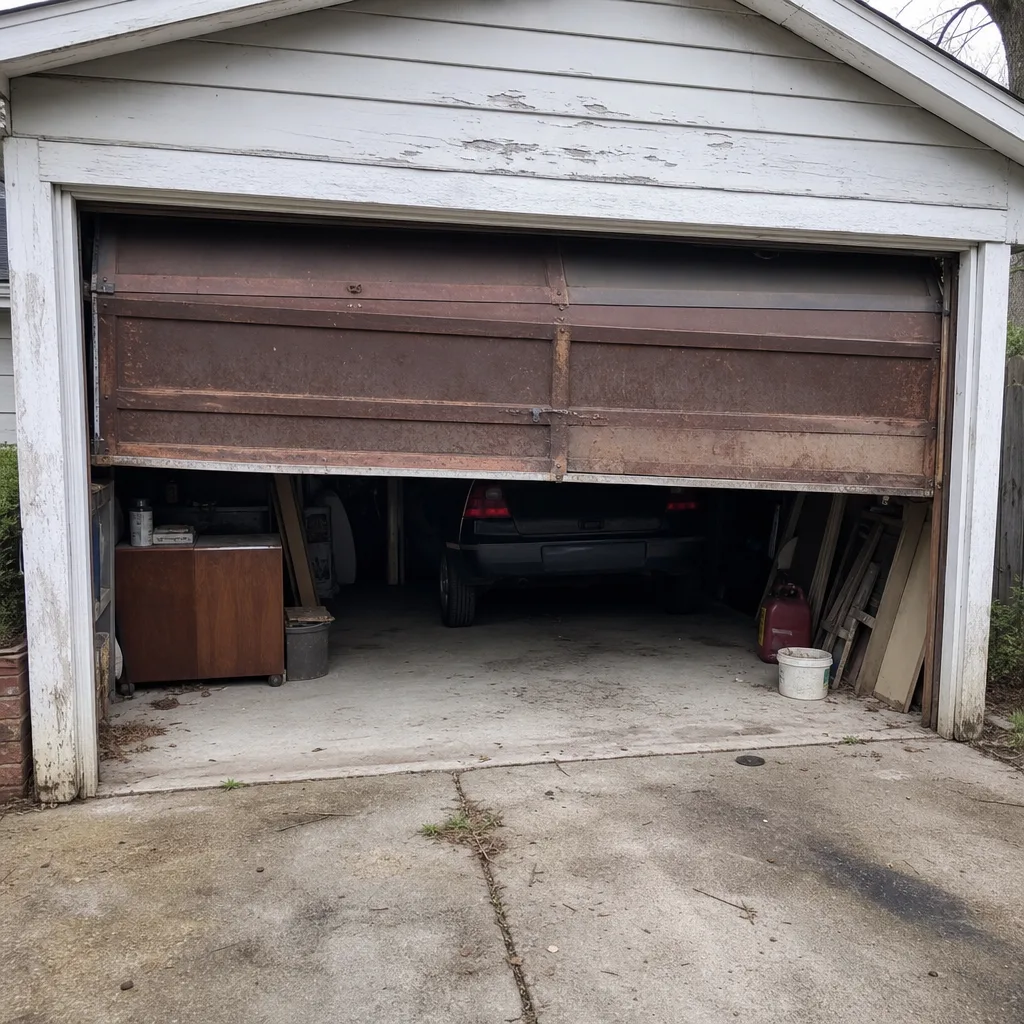 Before
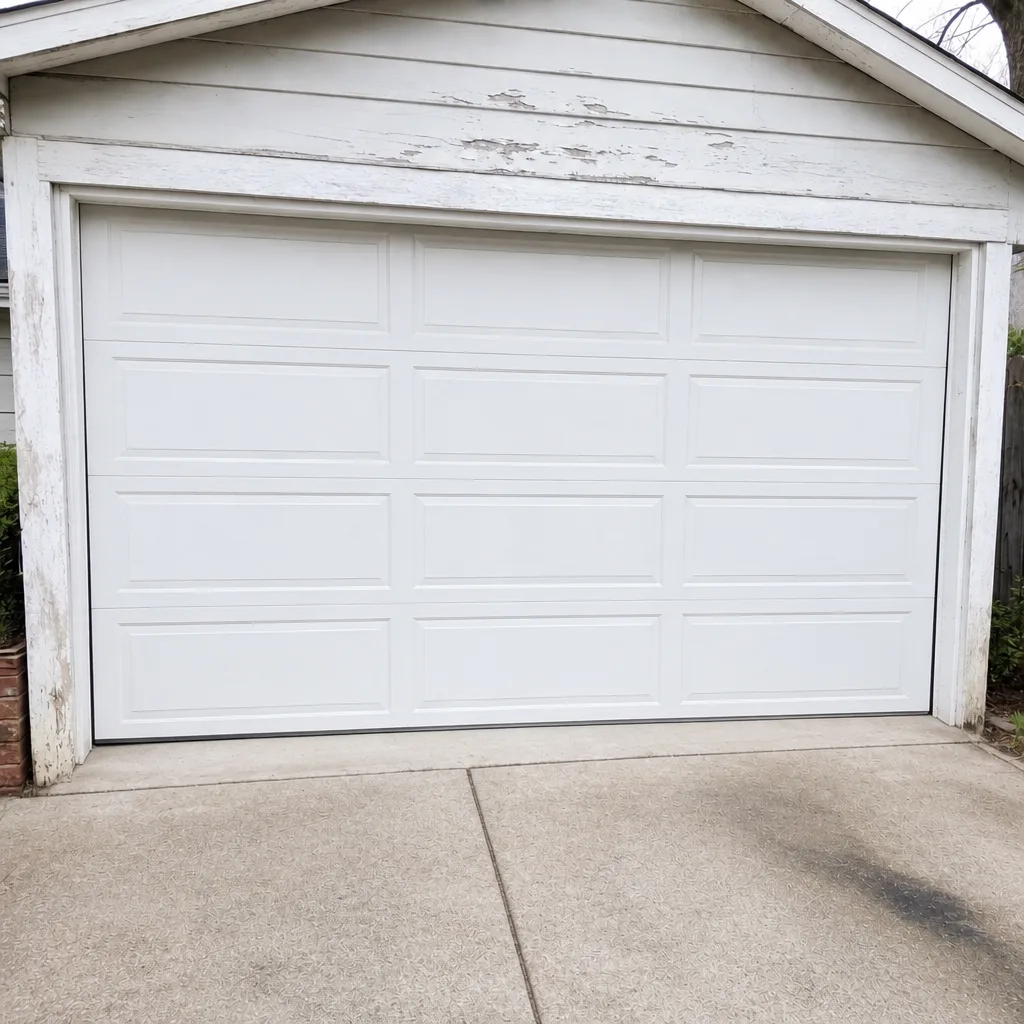 After
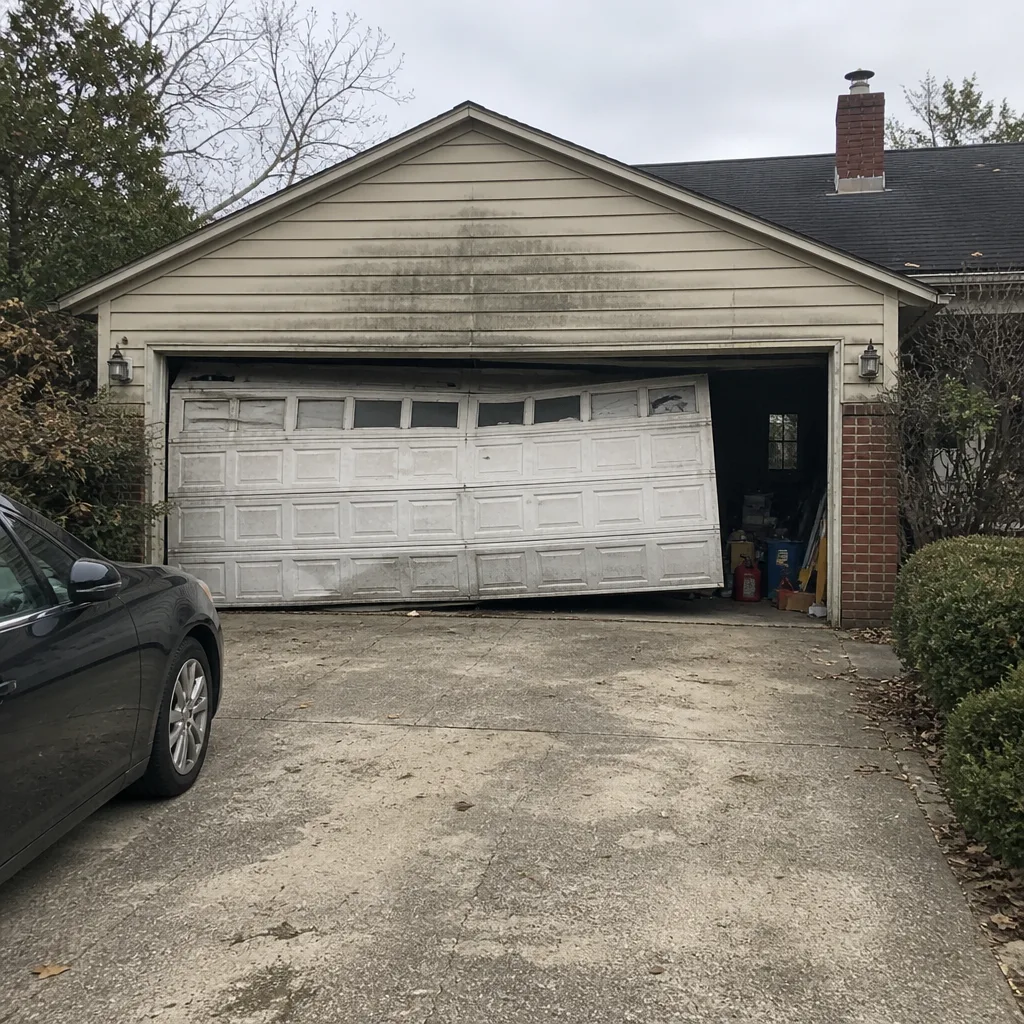 Before
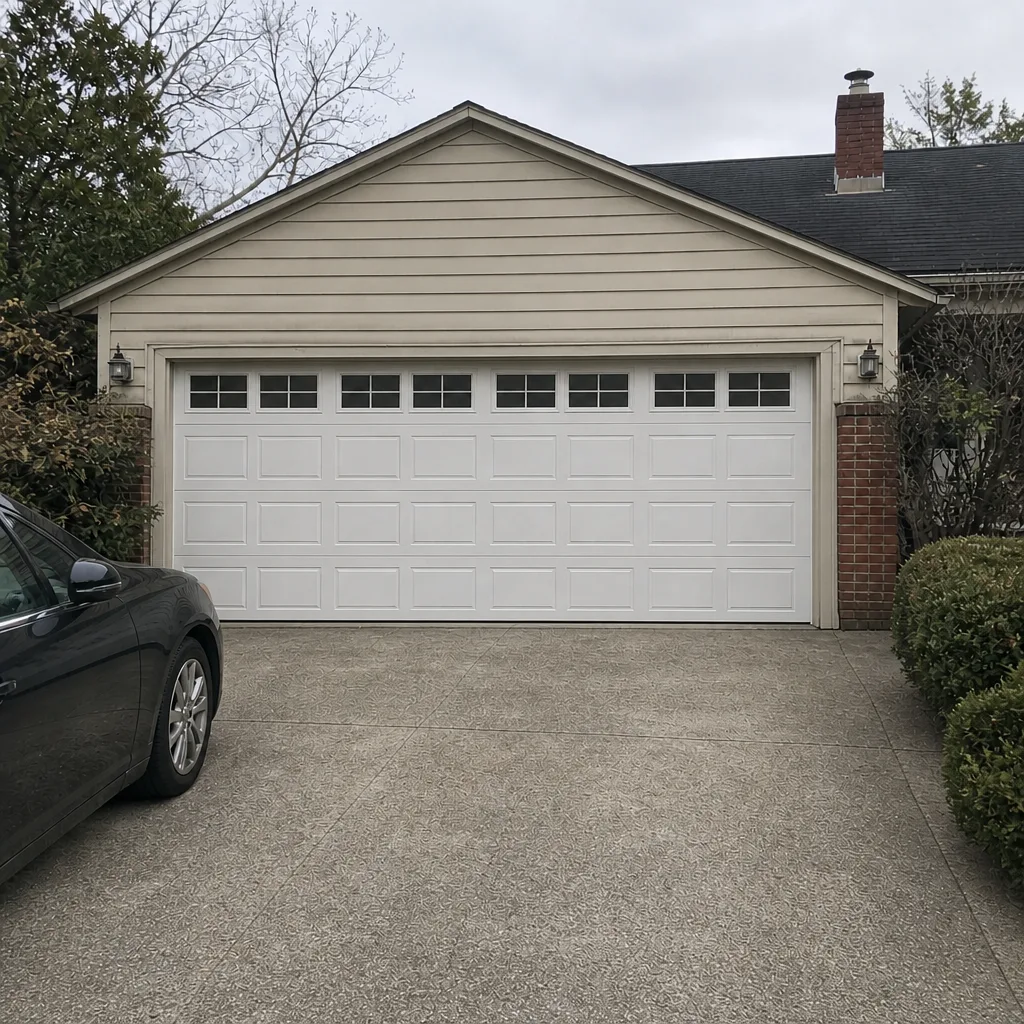 After
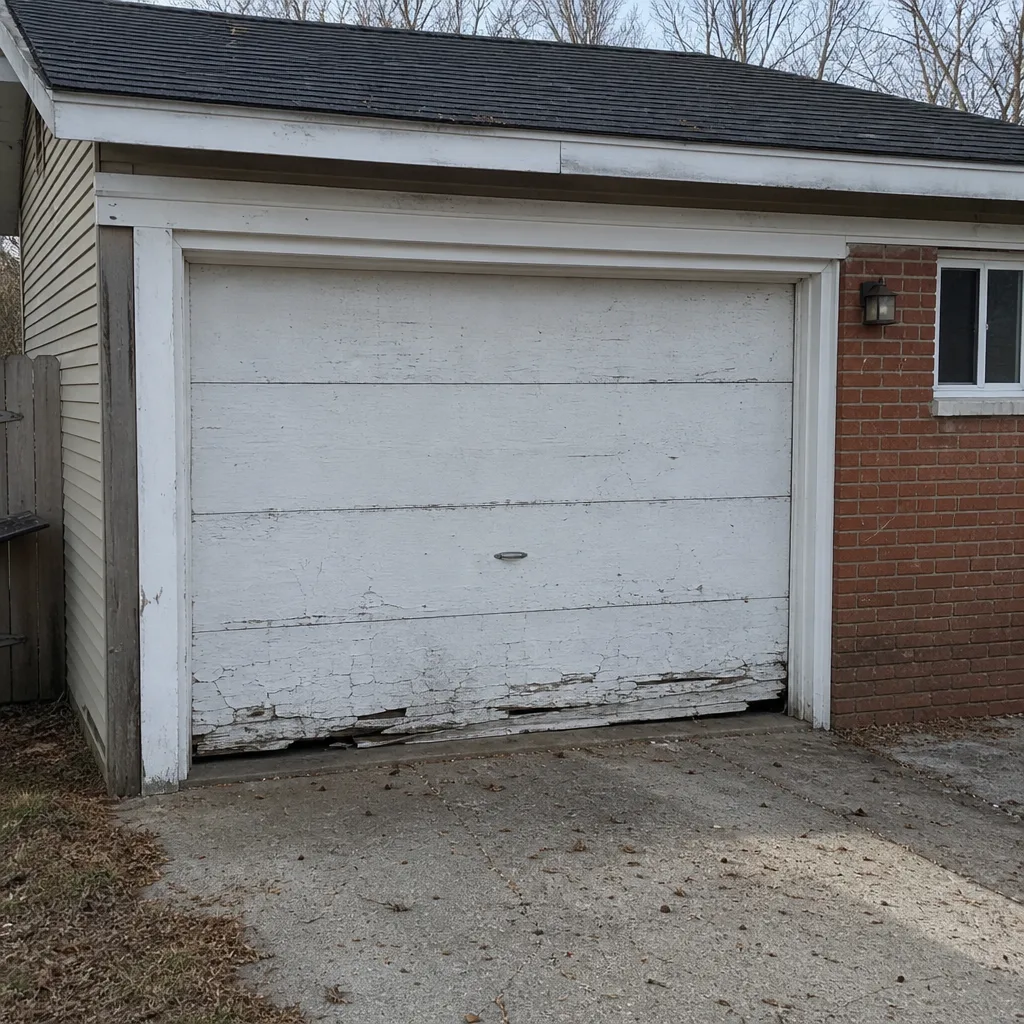 Before
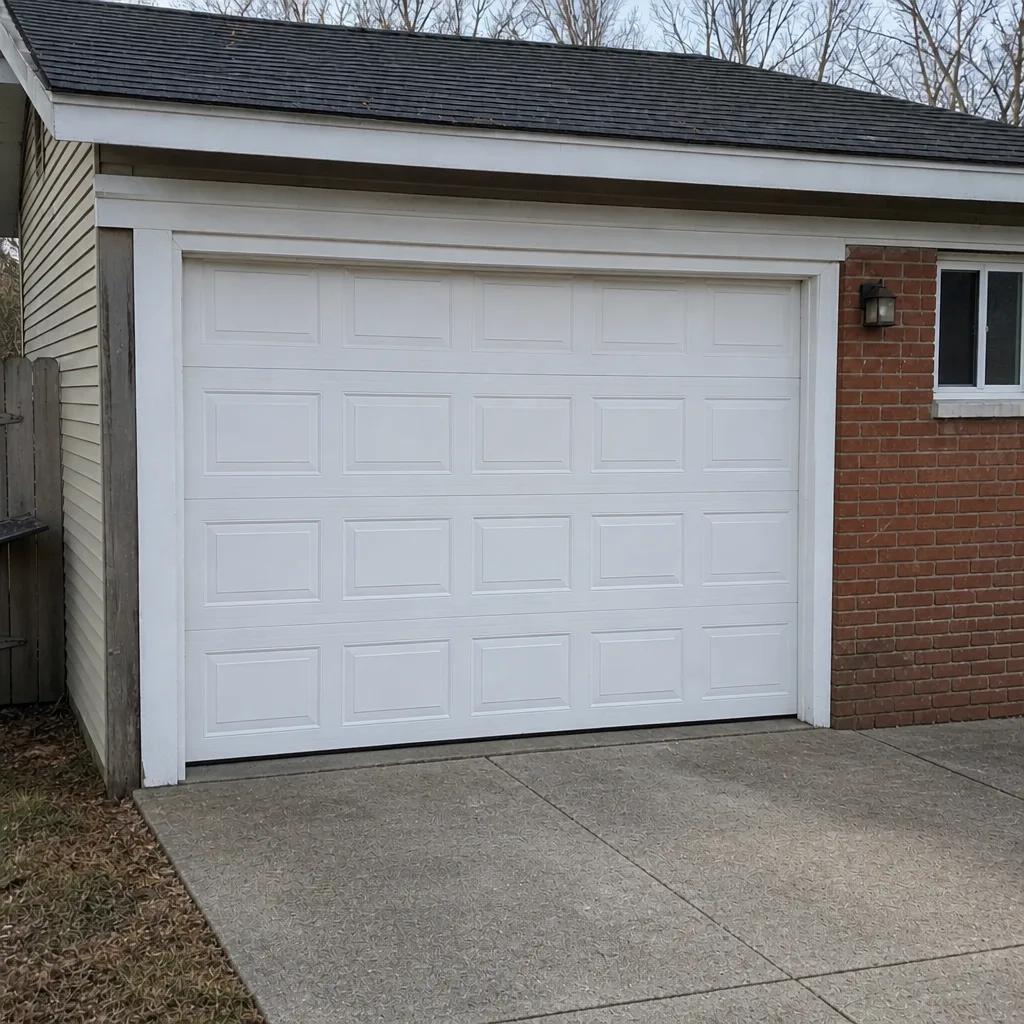 After
When to Call a Professional
Some jobs are fine to watch and understand; others need a trained technician in the room. Call a professional if the door is off its track, if a spring has broken (you’ll hear it), if the opener runs but the door doesn’t move, if the door is unbalanced and lifts hard on one side, or if the safety sensors won’t stay aligned. Detached-garage wiring changes and any new circuit should go to a licensed electrical professional. If a door fails outside normal business hours, our emergency garage door service is a named offering, not an upsell, and we’re structured to respond when a door won’t open or close at the worst time. College Park Garage Door Repair Pros offers free estimates in College Park – call (844) 622-0665 and we’ll take a look.
Frequently Asked Questions
Because the bays were built before modern sectional door hardware was standard, and many have ceilings too low for a conventional horizontal track and opener rail. Low-headroom track and a jackshaft opener solve most of these cases without modifying the building. Measure headroom before you buy anything, and call (844) 622-0665 for a free estimate if you’re unsure what your bay will accept.
Belt drive is usually the better fit for a townhome, because a reinforced belt runs quieter than a metal chain and the noise doesn’t carry into a bedroom above the garage. Chain drive remains a solid, more affordable choice for a detached garage where noise isn’t a concern. Call (844) 622-0665 to talk through your layout – estimates are free.
Most openers that still run can be repaired rather than replaced. Stripped gears, misaligned sensors, worn belts, and control-board issues are all repair jobs, and keeping your existing unit is usually the cheaper answer. We work on LiftMaster, Chamberlain, Genie, Craftsman, and others, so call (844) 622-0665 for a free estimate on what your unit needs.
Compare the repair cost against the replacement cost, divided by the years each option should last – that’s cost-per-year-of-life. If the door’s panels and structure are sound and one part is failing, repair usually wins. If the structural sections are rusting or sagging, replacement is the better spend. Call (844) 622-0665 for a free estimate and an honest repair-first opinion.
Tell whoever quotes the job, because detached garages have longer control wiring runs, their own electrical circuit, and bigger temperature swings than attached ones. Any new circuit should go to a licensed electrical professional, and most cities require a permit for it – ask your city’s building department. Call (844) 622-0665 for the garage door and opener side of the work.
No. Torsion and extension springs are under extreme tension, and a mistake can cause serious injury – this is not a DIY repair. A trained technician with the right tools handles it safely. Call (844) 622-0665 for spring repair and a free estimate; estimates are free.
The Bottom Line
College Park’s housing stock is the thing every garage door decision here has to answer to. Measure headroom, side room, and back room before buying anything, because the Cape Cods and postwar ranchers on the older blocks won’t accept a standard door. Detached garages need their own wiring plan. Humidity swings and a heavy tree canopy favor steel with prompt touch-ups or a good wood composite, and drive type should follow noise and clearance, not price. And when it comes to repair versus replace, run the cost-per-year math and let it decide. We work on the brand you already have – Clopay, Amarr, Wayne Dalton, Genie, and the rest – so the answer is usually repair first.
Talk to Us About Your Door
If you’ve read this far, you probably have a specific door or opener question, and we’d rather answer it with your measurements than guess. Whether it’s a low-headroom bay in an older Cape Cod, a noisy chain drive over a bedroom, or a spring that needs to be handled safely, one call covers it – we handle everything from a single broken part to a full new installation, without handing you off to someone else. Call (844) 622-0665 for a free estimate. Estimates are free, the price is quoted and agreed before any work starts, and our technicians have up to 12 years of experience working on the brands already on your house. Visit College Park Garage Door Repair Pros when you’re ready to get started.
Written by the team at College Park Garage Door Repair Pros.