Top Signs You Need Garage Door Service – Don’t Ignore These
A garage door that takes three seconds longer to open than it used to isn’t a nuisance. It’s a motor working against a spring that’s losing tension, and within weeks that imbalance will either burn out the opener or drop the door mid-cycle. Most of the expensive garage door failures we see in College Park started as a small symptom someone decided to live with. A garage door is a connected system, so one worn part puts load on the next. Catch it early and the fix is often a single component. Wait, and the bill spreads.
Key Takeaways
- Almost every warning sign is a linked-system symptom, not an isolated quirk.
- You can test balance and inspect cables yourself in under two minutes.
- Where a noise comes from tells you more than what it sounds like.
- An uneven door at the bottom points to cable wear, not just a tired seal.
- Repairs are cheaper than the chain reaction that follows a neglected sign.
If you’d rather not climb up and run the checks yourself, we get it. Call (844) 622-0665 and we will sort out what’s actually wrong.
What does a failing garage door actually feel like before it breaks?
A failing garage door usually shows up as a change in rhythm before it shows up as a break. It runs slower, sounds different, or stops settling the way it used to. Those changes are early-stage failures inside a mechanical chain: springs balance the door’s weight, cables keep it level, rollers and hinges guide it, and the opener supplies the push. When the spring weakens, the opener has to lift weight it was never sized for. When a cable frays, the door pulls to one side and drags on the tracks. When rollers seize, the door fights its own rails. None of that stays contained. The reason we push early diagnosis in College Park is simple math: a worn part caught early is one repair, while the same part ignored tends to take the opener or the door panels with it.
How do you do the balance test on a garage door?
The balance test is the single most useful check a homeowner can do, and it takes about a minute. Close the door, pull the opener’s release cord so the door is running on its springs alone, then lift the door by hand to about halfway. That’s where you want to pay attention.
- A balanced door sits where you leave it, near mid-height, with light effort. The springs are holding the weight for you.
- A door that wants to fall is carrying a weak or broken spring. You’re lifting weight the springs should be lifting, and the opener is about to do the same.
- A door that wants to rise on its own points to springs that are over-tensioned or cables that are out of adjustment.
Re-engage the opener before you use the door again. If the door fell or rose on its own, don’t keep cycling it. Call a pro, because the spring is announcing it’s about to let go.
Why the noise matters more than you think
Noise is directional data. Where it comes from tells you which part of the system is complaining, which is why a good technician listens before touching anything.
- Squealing from the rollers and hinges usually means dry or worn bearings. Lubrication helps early; replacing the rollers is the real fix once they seize.
- Grinding from the opener head points to worn gears or a failing drive inside the unit, not the door. That’s a repair, not automatically a whole new opener.
- Popping from the torsion bar above the door is the sound of a spring under load, and it’s your cue to stop using the door until someone looks at it.
- A rhythmic clunk with every pass often means a bent track or a loose hinge pulling the door off its line.
If it’s the opener making the noise, that’s a component-level diagnosis, and our garage door opener repair service is built around fixing the specific drive system rather than pushing a full replacement.
The 90-second rust-and-cable inspection
Spend ninety seconds looking at the door before you use it, and you’ll catch most imminent failures while they’re still cheap. Look at the cables running down each side of the door and the hardware where they attach. You’re checking for three things: rust, fraying, and slack. Rust creeping into the cable ends or the springs themselves is a slow countdown. Frayed strands near a drum mean the cable is close to snapping. A cable that’s gone slack or come off its drum means the door is already running on borrowed time. In our experience across College Park, most sudden door failures start at one of those two cables, and they’re visible long before they break. Never touch a cable under load or try to rewind a torsion spring – those are under extreme tension and are not a DIY repair. Look, note what you see, and leave the tension work to a trained technician.
Why an uneven door at the bottom usually means cable wear
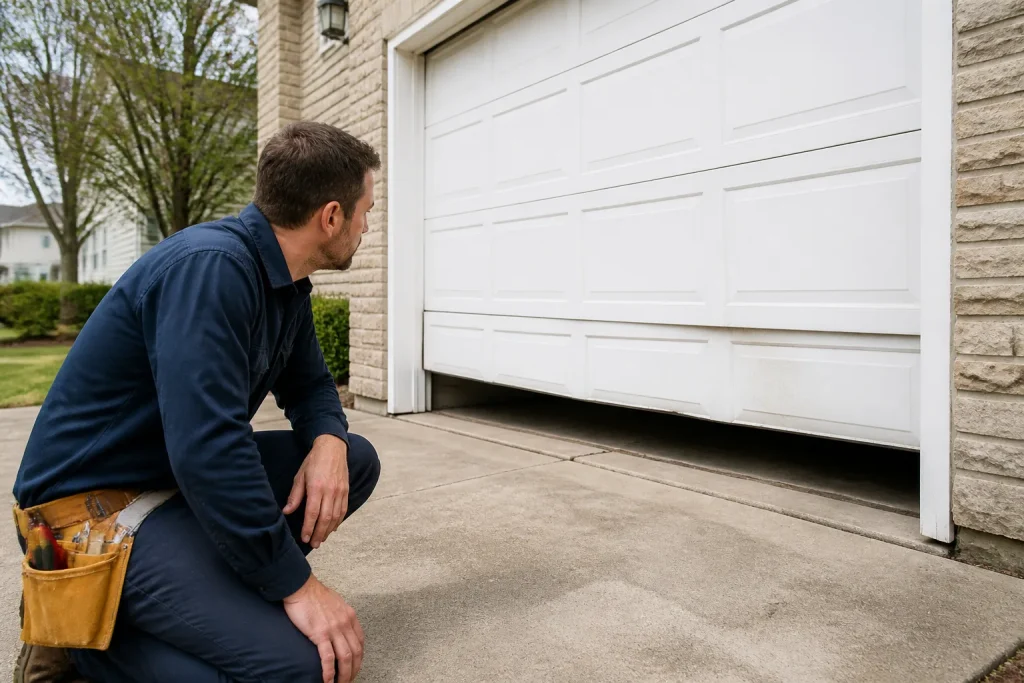
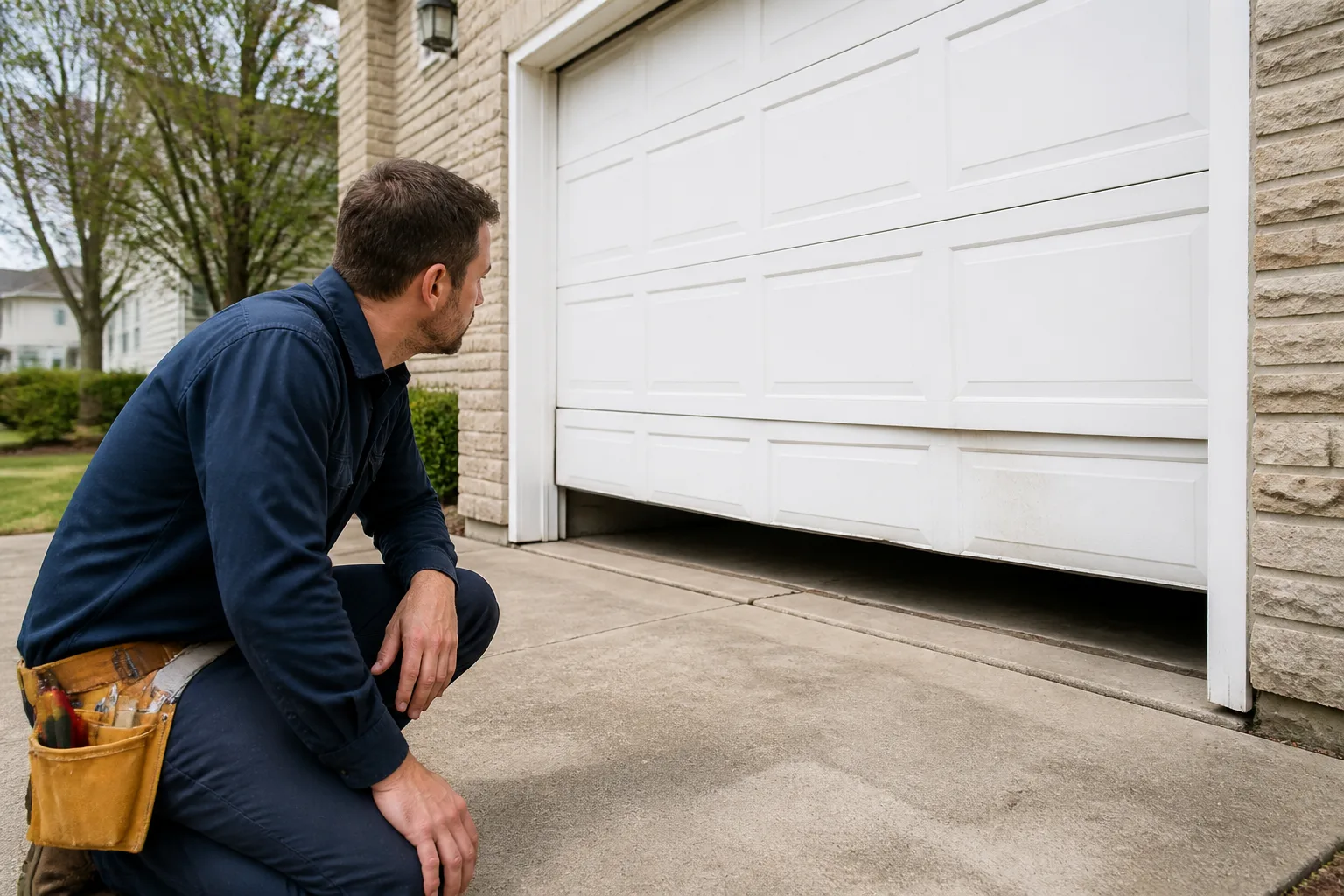
An uneven gap under the door – one side resting lower than the other – looks like a weatherstripping problem and usually isn’t. It’s a leveling problem, and the cables are the leveling mechanism. When one cable stretches or frays, that side of the door sits lower, and the opener starts fighting a door that’s out of balance on every cycle. Left alone, the opener’s motor and gears take a beating trying to compensate for the drag. When the worn cable finally gives, the door drops on one side, tracks bend, and what was a single-cable repair becomes a door, track and opener job. That chain reaction is exactly what we mean by ignoring sign #2 and creating the emergency. Only the door’s opener drives it, so a door that no longer sits flat is a warning about the whole system, not about a seal. Catching it at the “looks a bit uneven” stage is the difference between a quick fix and a full rebuild.
Slow remote response – battery or logic board?
A remote that takes longer to respond is either a dying battery or a fading logic board, and there’s a simple test to tell them apart. First, try a fresh battery and watch how the opener responds. A crisp, immediate reaction points to the old battery being the culprit. If the door still hesitates after a new battery, try the wall control inside. If the door responds instantly from the wall but the remote lags, focus on the remote or the receiver. If both are slow, the logic board is suspect. Opener brands hold up differently here: Genie and Wayne Dalton units we see in College Park often show age at the board first, while a LiftMaster or Chamberlain unit that’s sluggish usually turns out to be signal or battery related. A quick diagnosis saves you from replacing an opener that only needed a battery or a board-level repair.
When to call a pro
Call a pro when the door falls or rises during the balance test, when you see a frayed or slack cable, when the torsion bar pops, or when the opener is grinding or hesitating after a new battery. Those are the moments where a small, controlled repair turns into an emergency if you keep cycling the door. If a door fails at a bad time, our emergency service is a real, named offering and always available. We work on the brand you already have – Genie, Clopay, Amarr, Wayne Dalton, and the other major systems – so you’re not pushed toward a replacement you don’t need. Our technicians have up to 12 years of experience, and the price is quoted and agreed before any work starts, so the number you hear at the door is the number on the estimate.
Related services in College Park: if the symptom trail leads to springs under tension or a door that won’t run straight, our garage door spring repair and general garage door repair cover the diagnosis and the fix. And when it’s something a step bigger – bent panels or a door that’s reached the end of its life – we handle the full path from a single part to a complete installation, one call covers it. You can see the full range of what we handle at College Park Garage Door Repair Pros.
The Bottom Line
Every sign on this list is an early-stage failure in a connected system, which is why catching the small ones keeps the big ones from happening. Run the balance test, do the 90-second cable check, and listen to where the noise comes from. An uneven door, a slow opener, and a door that won’t hold mid-height are the warning shots. If you’re in College Park and need help, College Park Garage Door Repair Pros offers free estimates – call (844) 622-0665.
Frequently Asked Questions
Once a year for most homes, and more often if you use the door heavily or notice any change in how it runs. Annual service catches worn springs, dry rollers and frayed cables before they fail.
Yes, the balance test is safe to run yourself: close the door, release the opener, and lift to mid-height. What you should not do yourself is adjust or replace the springs or cables, because they’re under extreme tension. Call a trained technician for that.
Slow or uneven movement usually means the door is out of balance, often from a weakening spring or a cable that’s stretched or frayed. Have it checked before the opener or the door takes damage.
Stop using the door and call a pro. A frayed or slack cable means the door is minutes from dropping on one side, and a trained technician should handle the repair. Call (844) 622-0665 to get it looked at.
Written by the team at College Park Garage Door Repair Pros.
Need Garage Door Help?
Call College Park Garage Door Repair Pros - the local pro we connect you with is licensed and insured, here with fast after-hours help in College Park.
(844) 622-0665